

 Suche
Suche
 Mein Konto
Why Palestine is so important and the world cannot turn a blind eye
Discover Palestine's geostrategic importance to global resources, trade routes, and the future of energy and the Internet.

Why Palestine is so important and the world cannot turn a blind eye
Palestine, a small territory in the heart of the Middle East, is much more than just a point of conflict on the world map. It is a geostrategic pivot whose control has far-reaching implications for global balances of power. Whoever gains the upper hand here influences not only regional dynamics, but also the stability of energy markets, the security of digital infrastructures and the economic future of entire nations. From the oil streams that flow through neighboring routes, to the submarine cables that direct data traffic between continents, to the financial structures that support pension systems around the world, the importance of this territory runs deep into the everyday lives of each individual. This article examines the hard facts behind Palestine's strategic relevance and shows why control over the territory is synonymous with influence on global lifelines.
Geostrategic location of Palestine
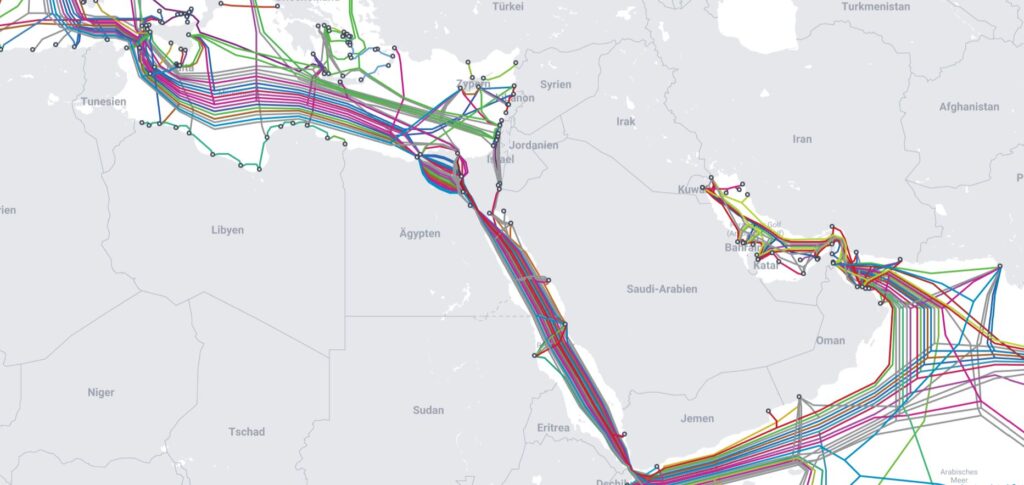
Located in the center of the Middle East, Palestine functions as an inconspicuous yet indispensable hub of global connections. Its geostrategic position makes it a key factor in controlling resources and infrastructure that form the backbone of the modern global economy. Nestled between Asia, Africa and Europe, this area lies at the intersection of trade routes, energy corridors and digital networks, the importance of which extends far beyond regional borders.
Let's start with energy resources: Palestine's proximity to the world's richest oil deposits and gas export transit routes makes it a strategic hotspot. Although the area itself has no significant reserves, it borders countries and routes that determine the global energy flow. Pipelines and shipping routes that run through the Middle East are often only a few hundred kilometers away. Instability in this region can immediately disrupt supply chains and drive up global oil prices, which will be felt right at the pumps. Control over this zone means influence on the stability of global energy markets.
On another level, region plays a central role in data traffic. Submarine cables that carry internet traffic between Europe, Asia and Africa run along the coasts of the eastern Mediterranean. These digital lifelines carry much of the world’s data – from financial transactions to everyday communications. Palestine's proximity to these cables and associated landing points makes it a potential checkpoint. Disruptions or targeted interventions could have a serious impact on the global flow of information and affect both companies and private individuals worldwide.
Added to this are the trade routes that have run through the Middle East for centuries and are now gaining new importance in modern economic corridors. Projects such as China's Belt and Road Initiative (BRI), which has invested over a trillion dollars in infrastructure worldwide since 2013, and the India-Middle East-Europe Economic Corridor (IMEC), which has been pushed forward since the G20 summit in 2023, illustrate the strategic situation. Both initiatives aim to connect Asia with Europe across the Middle East – through railways, data cables and pipelines. The IMEC, supported by countries such as India, Saudi Arabia and the United States, is also intended to counter China's influence in the region, as described in an analysis by the Carnegie Endowment for International Peace ( Carnegie Endowment ). Although Palestine is not directly on these corridors, its position significantly influences the security and stability of surrounding routes.
The region's historical significance as part of the ancient Silk Road underlines its role as a link between continents. Today, this status is being redefined by modern infrastructure projects, but political tensions are making implementation difficult. Conflicts such as that between Israel and Iran or the recent developments in the Hamas-Israel war since October 2023 have brought negotiations on projects such as the IMEC to a standstill. Such instabilities in and around Palestine directly impact the viability of global trade networks, as investors and states rely on security to advance multi-billion dollar projects.
Another aspect is the geopolitical competition that these corridors increase. While China is already active in 155 countries with the BRI and has become the largest foreign investor in the Middle East since 2016, the IMEC, supported by Western powers, is trying to create a counterweight. This rivalry between great powers such as the USA and China takes place on the soil of the Middle East - and Palestine is at the center of the tension. Anyone who gains influence here can not only direct regional dynamics, but also help shape global power relations.
The complexity of these projects is further increased by the large number of actors involved and their different interests. While countries such as Egypt and Turkey are excluded from some corridors, border disputes and sovereignty issues pose further hurdles. Palestine's strategic location makes it a potential disruptor or mediator in these tensions, depending on who is in control. The region therefore remains a chessboard on which global interests collide.
The Suez Canal
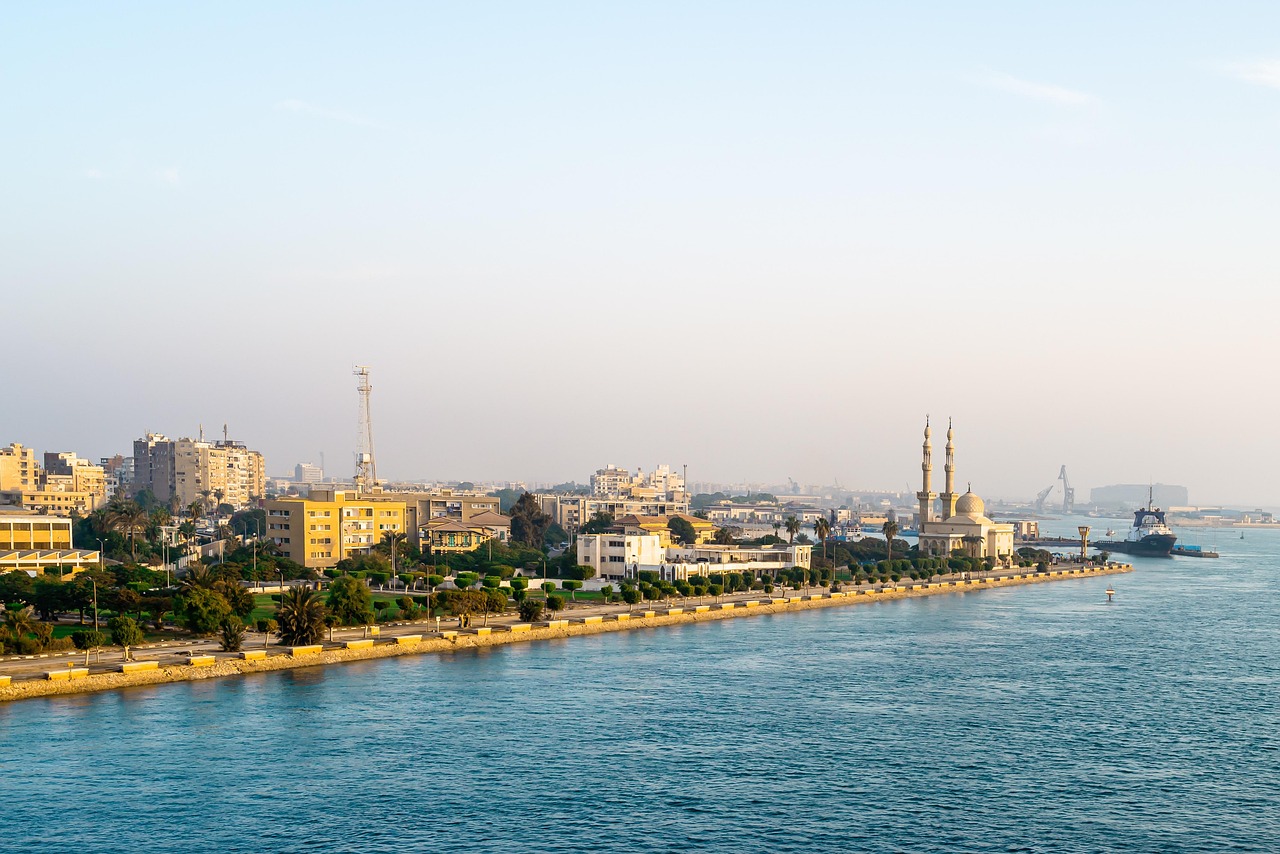
One of the most important lifelines of the global economy winds through Egypt, just a stone's throw from Palestine: the Suez Canal. This man-made waterway, connecting the Mediterranean and the Red Sea, provides an essential link between Europe and Asia. At over 193 kilometers long, the canal allows the direct transport of goods and data without ships having to take the long and costly route around the Cape of Good Hope. Its proximity to Palestine underlines the strategic relevance of the region, as instabilities here could directly jeopardize the security of this route.
The Suez Canal represents an incomparable advantage for world trade. It shortens the route between the Arabian Sea and London by around 8,900 kilometers, which massively reduces time and fuel costs. In 2021, over 20,600 ships passed through the canal, an average of 56 ships per day. These numbers illustrate how essential the waterway is to the global flow of goods - from raw materials such as oil to consumer goods. A striking example of the vulnerability of this route was the incident with the Ever Given in March 2021, when the container ship blocked the canal and paralyzed global trade for days. Such disruptions demonstrate how closely linked control of surrounding territories, including Palestine, is to the stability of global supply chains ( Wikipedia: Suez Canal ).
In addition to transporting goods, the Suez Canal plays a less visible but equally critical role for the Internet. Submarine cables that run along the route connect Europe, Asia and Africa and carry a significant portion of global data traffic. Egypt, as Palestine's direct neighbor, uses its geographical location to create efficient connections between the Red Sea and the Mediterranean. Telecom Egypt, the only operator of the landline network in the country, operates the so-called TE Transit Corridor, which has ten different terrestrial routes. This infrastructure connects landing stations on both seas and currently supports 15 active submarine cables, with another five under construction. Projects such as the 2Africa cable system, which is landing at new stations in Port Said and Ras Ghareb, highlight the region's growing importance to the digital world ( Submarine Networks: Egypt ).
The geopolitical dimension of the Suez Canal further enhances its strategic role. Since its opening in 1869, the waterway has repeatedly been the scene of international conflicts and power games. Nationalization by Egypt in 1956 led to the Suez Crisis, and the canal remained closed for eight years during the 1967 Six-Day War. Today it remains a military hotspot, used by navies with interests in both the Mediterranean and the Red Sea. While international treaties guarantee free passage, tensions in the region can quickly put these agreements to the test. Palestine's proximity to this strategic point means that any instability here will send ripples that reach to the canal and beyond.
Modernization projects underline the canal's continued relevance. Since 2014, major expansions have been made to increase capacity from 49 to up to 97 ships per day. New side canals and bypasses such as the Ballah Bypass are easing traffic, while plans for additional tunnels and bridges are expected to further improve connectivity. In parallel, the Suez Canal Economic Zone (SCZONE) encourages investment through reduced tariff rates and the development of ports and industrial areas. These initiatives demonstrate how the region is committed to cementing its position as a global hub.
For data traffic, the latest developments are as promising as they are challenging. Telecom Egypt reached an agreement with the Suez Canal Authority in March 2021 to create new terrestrial fiber routes between the Red Sea and the Mediterranean. The WeConnect ecosystem, launched in September 2023, facilitates access to Egypt's extensive submarine cable infrastructure. But the security of these digital connections depends on the stability of the entire region - a factor that underlines the importance of Palestine in this context.
The trade routes – The modern Silk Road
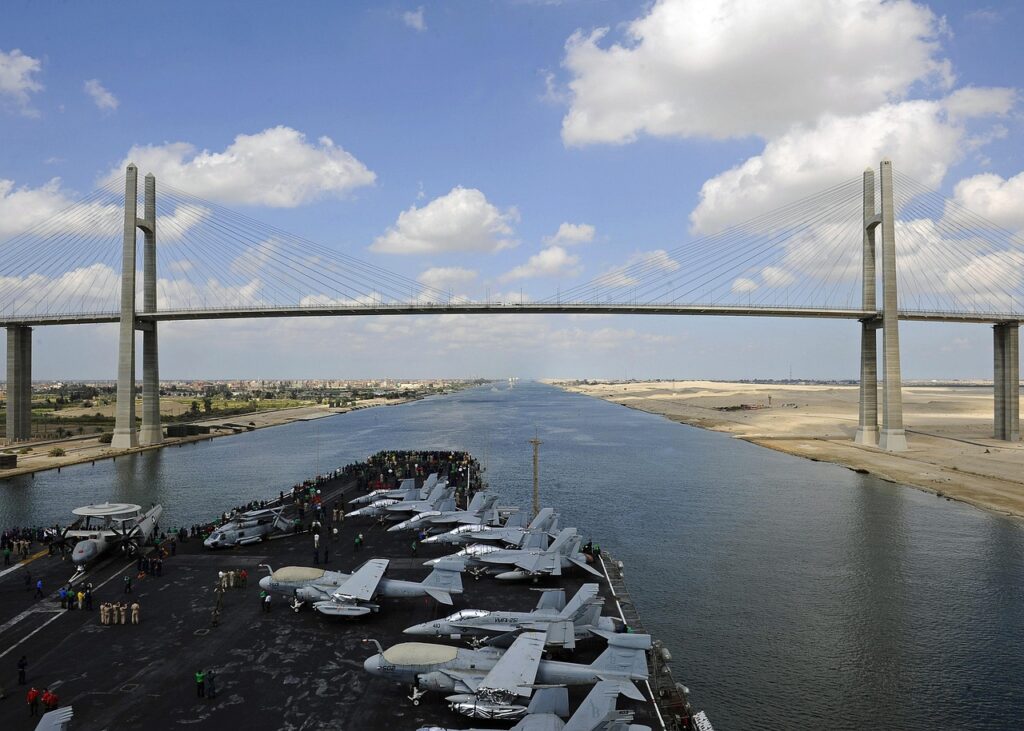
Imagine a waterway through which nearly $10 billion worth of goods flow every day – the Suez Canal is exactly that: an indispensable pulse of the global economy. Located directly at the interface between Asia, Africa and Europe, this canal forms a central axis for global trade. Its close proximity to Palestine makes the region crucial to the security and stability of this vital route. Any tremor in the area could threaten the flow of goods through the canal and disrupt global markets.
The sheer volume of cargo passing through the Suez Canal speaks volumes: in 2022, Chinese sea shipments alone accounted for 30 percent of all cargo traffic through the canal. With imports of 2,778 million tons and exports of 638 million tons in 2023, it shows how heavily global trade depends on this route. Studies show that a one percent increase in trading volume in the channel can lead to a 69 percent increase in the following year - a domino effect that underscores its economic importance. China's maritime trade activities could also increase canal traffic by 23 percent, analysis shows ( Journal of Shipping and Trade ).
A look at the energy supply further illustrates the strategic role. Between 5 and 10 percent of the world's maritime oil transport passes through the Suez Canal. Each day of a blockage – like the Ever Given accident in March 2021 – delays the shipment of 3 to 5 million barrels of oil. Such disruptions have a direct impact on the global energy industry and thus on prices, which are ultimately felt at gas stations. Palestine's proximity to this chokepoint means that regional tensions or conflicts here can have direct global consequences.
China's Belt and Road Initiative (BRI) further reinforces the canal's importance. Since 2013, Beijing has invested heavily in infrastructure projects, including energy, transportation and technology along trade routes using the Suez Canal. These investments, which according to studies have a positive impact of 5 percent on canal trade, show how closely the economic interests of major powers are linked to this region. At the same time, development projects on the canal itself - such as the expansion since 2014 - continue to boost trade volumes, with one percent increase in construction projects increasing freight traffic by 3 percent. Palestine, as an immediate neighbor, remains a potential disruptor for these ambitious projects.
The Suez Canal is not only a trade route but also a geopolitical chessboard. The Ever Given accident has put the spotlight on alternative corridors such as the Red-Med Corridor, which would connect Israel to the Gulf of Aqaba. Such projects could become more important if the channel is blocked again. Saudi Arabia's planned megacity Neom, near this potential corridor, and the normalization of relations between Israel and Saudi Arabia could spur investment in such alternatives. But the stability of these plans depends on security throughout the region - a factor that inevitably brings Palestine into play ( CGTN News ).
The connection between the Suez Canal and Palestine is also evident in the military dimension. The canal serves as a strategic point for navies pursuing interests in both the Mediterranean and Red Seas. Historical conflicts, such as the 1956 Suez Crisis or the closure during the 1967 Six-Day War, illustrate how quickly regional tensions can affect access to this route. Palestine's geographical location makes it a potential source of instability that could directly affect canal traffic.
Development strategies for the Suez Canal must continually adapt to keep pace with the growth of international maritime traffic. The expansion of the canal and new construction projects show positive effects on freight traffic, especially in years three and four after their implementation. But all this progress depends on a stable environment in which Palestine plays a key role. Control over this area not only affects local dynamics, but also the functionality of one of the world's most important trade routes.
Our energy
When you think of the Suez Canal, imagine an artery through which a significant portion of the world's oil flows. This waterway in Egypt, just a few hundred kilometers from Palestine, bears immense responsibility for global energy supplies. Its strategic position makes it an essential conduit for the transport of crude oil and refined products between the oil-rich regions of the Middle East and markets in Europe and beyond. The proximity to Palestine means that any unrest in the area could threaten the security of this vital energy route.
The numbers illustrate the importance of the Suez Canal for the oil market. Back in the 1950s, the canal was responsible for transporting 1.7 million barrels per day, which then accounted for about 10 percent of global production. Global oil demand rose rapidly - from 10 million barrels per day in 1950 to 20 million in 1960. This demand, driven by the post-World War II reconstruction of Europe and the rise of private vehicles, made the canal a central hub. Today, its role remains crucial, with a significant portion of oil transport between the Persian Gulf and Western markets passing through this route ( Springer: Oil Transport through the Suez Canal ).
Historical events show how vulnerable this route is to regional tensions. Egypt's nationalization of the Suez Canal in 1956 under Gamal Abdel Nasser led to military action by Israel and the temporary closure of the canal. The consequences were immediate: longer transport routes around the Cape of Good Hope drove up the costs of oil tankers and briefly affected supplies to Western Europe. As countries such as Venezuela and the US increased production to close the gap, it became clear how closely the stability of this route is linked to the geopolitical situation in the region. Palestine, as a direct neighbor, played a role in these conflicts that could influence access to the canal.
Another turning point came with the Six-Day War in 1967, when the Suez Canal remained closed until 1975. During this time, Arab oil producers such as Iraq called for an export ban on countries that supported Israel. Saudi Arabia, Kuwait and Iraq halted deliveries to British and US tankers, putting significant pressure on the oil market. The closure of the canal not only had an economic impact on Egypt, but also on global energy prices. The 1973 oil crisis reinforced this dynamic, as the price per barrel rose from $2.90 to $12.00 - a shock that hit the global economy and underscored the dependence on stable transportation routes such as the Suez Canal.
The strategic importance of the canal has been repeatedly tested by conflicts in the Middle East. The Arab-Israeli conflict, which intensified with the founding of Israel in 1948, led to the closure of important oil pipelines, such as the route from Iraq to Haifa. Internal power struggles in the region also resulted in the closure of the Trans-Arabian Pipeline (Tapline) in 1975. Such developments illustrate how political instability in and around Palestine can affect access to energy routes that pass through or depend on the Suez Canal.
The discovery of new oil fields in Saudi Arabia between 1948 and 1955, which increased output from 60,000 to almost a million barrels per day, increased dependence on the Suez Canal as a transit route. At the same time, events such as the nationalization of Iran's oil industry in the 1950s, which resulted in an embargo of 19 million barrels per month by the United States and Britain, created further shortages. In this context, the canal remained a central point whose functionality depended on the stability of the surrounding region - a factor that inevitably brings Palestine into play.
The connection between the Suez Canal oil routes and Palestine is also evident in the military dimension. The canal was and is a strategic point for major powers that want to secure their interests in the Middle East. Tensions in Palestine can quickly impact the security of this route, whether through direct conflict or by disrupting alternative pipelines and transport routes. Anyone who has influence in this area holds a key to global energy supply, the effects of which extend to gas pumps worldwide.
This is not a war between humanitarians and occupiers, but a geopolitical power struggle over an unstable region along the world's most globally important region for the global economy and data security. Whoever controls Palestine undermines the security and stability of trade routes, data transfers and energy worldwide.
Sources
- https://carnegieendowment.org/research/2024/02/the-geopolitics-of-economic-development-in-the-middle-east?lang=en
- https://en.wikipedia.org/wiki/Suez_Canal
- https://www.submarinenetworks.com/en/stations/africa/egypt#:~:text=In%20March%202021%2C%20Telecom%20Egypt,trans%2DEgypt%20terrestrial%20crossing%20routes.
- https://jshippingandtrade.springeropen.com/articles/10.1186/s41072-024-00167-y#:~:text=The%20Suez%20Canal%20(SC)%20serves,and%20the%20impulse%20response%20function.
- https://news.cgtn.com/news/2021-03-29/The-Suez-Canal-accident-shows-the-importance-of-China-s-Silk-Roads-Z1nauHB0mA/index.html
- https://link.springer.com/chapter/10.1007/978-3-031-15670-0_5#:~:text=In%20addition%2C%20almost%2093%25%20of,the%20Suez%20Canal%20since%202010.&text=The%20challenges%20posed%20by%20the,million%20b/d%20in%202018.
- https://www.atlanticcouncil.org/in-depth-research-reports/issue-brief/a-lifeline-under-threat-why-the-suez-canals-security-matters-for-the-world/#:~:text=Introduction,a%20stable%20supply%20of%20energy.